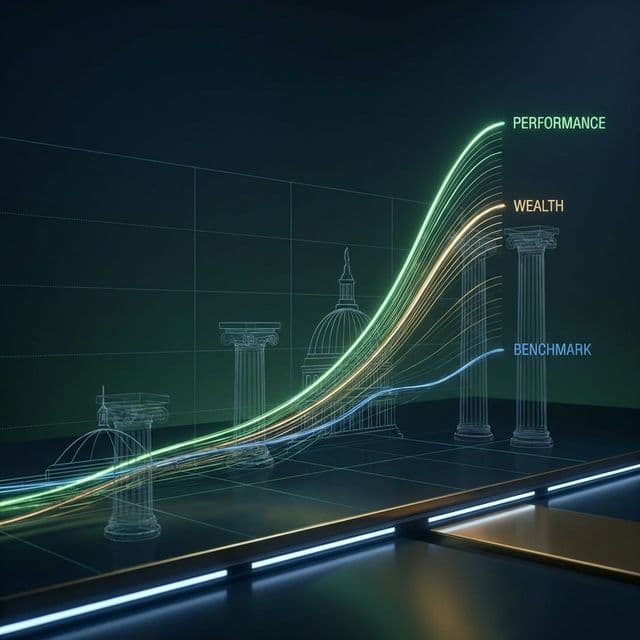
An in-depth analysis of how members of Congress manage to achieve stock market returns that baffle Wall Street's top hedge funds, and what their trades reveal about market movements.
The Unfair Advantage: Is It Skill or Information?
In the world of finance, the "efficient market hypothesis" suggests that it is impossible to consistently beat the market because stock market efficiency causes existing share prices to always incorporate and reflect all relevant information. Yet, a specific group of investors seems to defy this rule year after year: the members of the United States Congress.
This phenomenon has been colloquially dubbed the "Pelosi Effect," named after former Speaker Nancy Pelosi, whose husband, Paul Pelosi, has made a series of highly timely and profitable trades in major tech companies like Nvidia, Microsoft, and Alphabet. While legal, these trades have sparked a firestorm of debate regarding the ethics of lawmakers—who have access to classified briefings, committee hearings, and impending legislative details—trading stocks in the very industries they regulate.
The Data Doesn't Lie: Beating the Benchmark
Multiple independent analyses have confirmed that congressional portfolios often outperform the S&P 500. In 2023 alone, dozens of members of Congress reported trading returns that significantly exceeded the market average. This isn't just about one or two lucky picks; it is a systemic pattern of "smart money" moving ahead of major news cycles.
Key Sectors of Outperformance
- Technology: High-profile trades in semiconductor and AI stocks often precede major government subsidies or favorable regulatory rulings.
- Defense: Purchases of defense contractor stocks have historically spiked weeks before the announcement of new foreign aid packages or military contracts.
- Energy: Legislative shifts towards green energy or fossil fuel deregulation are often mirrored in the buying habits of committee members overseeing these sectors.
The "Information Gap" Explained
Why do they win? The answer likely lies in the information gap. While a retail investor relies on quarterly earnings reports and public news, a member of Congress might know:
- That a major antitrust lawsuit is about to be dropped.
- That a specific company will be awarded a multi-billion dollar government contract next month.
- That a new regulation will crush the profit margins of a specific industry.
This isn't "insider trading" in the traditional corporate sense (trading on non-public company data), but rather "political insider trading" (trading on non-public legislative data). Currently, this is largely legal under the STOCK Act, provided the trades are disclosed. For a broader overview of the legal landscape, see our complete guide to congressional stock trading.
How Retail Investors Can Leverage This Data
For the average investor, this data is a goldmine. While you cannot sit in the closed-door meetings, you can watch the disclosures. When a Senator on the Armed Services Committee buys heavily into Lockheed Martin, it is a signal. When a prominent member of the Finance Committee dumps bank stocks, it is a warning.
TraderCongress was built to close this gap. By aggregating and analyzing these disclosures in real-time, we allow retail investors to see the "shadow order flow" of the most powerful people in the country. The goal isn't just to copy every trade, but to use congressional sentiment as a leading indicator for broader market trends. Check out our guide to tracking tools to get started.
"If you can't beat them, join them. Or at least, watch where they are putting their money."
Conclusion
The "Pelosi Effect" is more than a meme; it is a quantifiable market anomaly. As long as members of Congress are permitted to trade individual stocks, their portfolios will remain a critical dataset for any serious investor. The question is no longer if they have an advantage, but how you can use that information to your benefit.