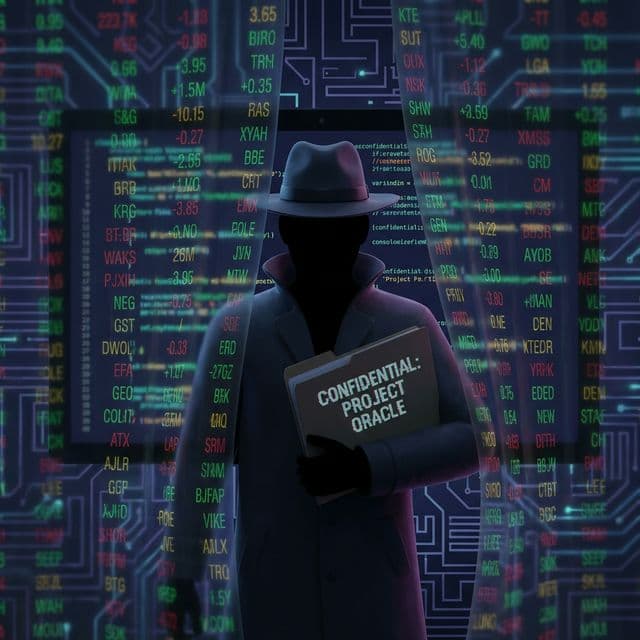
How politicians legally hide their true positions using spouse accounts, shell trades, and the 45-day delay window. A detective's guide to the data.
The "Owner: Spouse" Loophole
When you scan the Periodic Transaction Reports (PTRs), you will notice a column labeled "Owner." It usually says "Self," "Joint," or "Spouse." This detailed distinction is the most common way members of Congress distance themselves from controversial trades while still reaping the benefits. For full context on the disclosure system, see our complete guide to congressional stock trading.
Under the current interpretation of the rules, a member can claim they had "no knowledge" of a trade made by their spouse, even if that trade perfectly aligns with a committee hearing the member attended earlier that day. This "pillow talk" trading is notoriously difficult to prove as insider trading, yet the correlation is undeniable.
The "Late Filing" Strategy
Imagine a member of Congress knows a stock is about to tank. They sell $500,000 worth of shares. If they report this immediately, the public (and the media) might panic, asking "What do they know?"
Instead, they wait. They wait 45 days, or sometimes months, accepting a trivial $200 fine for a late filing. By the time the disclosure is public, the news is old, the stock has crashed, and they have saved their capital. TraderCongress tracks these "repeat offenders"—members who consistently file late. A late filing is often a stronger signal than an on-time one; it implies the information was too sensitive to reveal in real-time. Learn more about the STOCK Act's penalty structure.
The "Asset Class" Rotation Signal
Most trackers focus on stock picks (e.g., "They bought Tesla!"). However, the macro signal is often found in asset class rotation.
- Flight to Safety: If you see a bipartisan wave of members selling equities (stocks) and buying Treasury bills, municipal bonds, or cash equivalents, it is a massive bearish signal for the economy.
- Sector Rotation: If members of the Energy Committee stop buying Oil & Gas stocks and start buying renewables, the legislative wind is shifting long before the bills are public.
Shadow Trades: The Dark Pools of Politics
Beyond standard stocks, members also trade in more opaque instruments:
- Options & Derivatives: Buying "Put" options is a direct bet against a company. When a lawmaker bets against a major employer in their district, they are essentially shorting their own constituents—often a sign they know bad news is inevitable.
- Private Equity & Real Estate: Many deals happen off the public exchanges. While harder to "copy-trade," these disclosures reveal deep connections to specific industries and heavy hitters in the private sector.
For another angle on hidden data, explore what dark pool and off-exchange data reveals.
How We Light Up the Shadows
Our algorithms at TraderCongress don't just read the ticker; they read the metadata. We look for the absence of trading as much as the activity. We analyze the timing of the "Spouse" trades vs. "Self" trades. We highlight the "Late Filings" in red. We bring the shadow trades into the light so you can make informed decisions based on the real flow of money in Washington.